


A Pena do Encanto Route
- San Tirso de Abres
- Circular route
- 4 km
- 1 hour and 20 minutes
- Download
From the municipal capital we go to the exit of the town towards Galicia, finding ourselves on the right hand side with the San Isidro square in whose center is the chapel with the same name, coinciding with the starting point of the route.
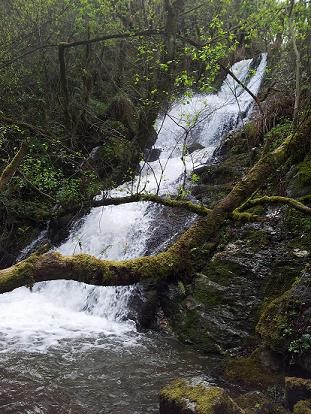
We will follow the asphalt road to Vilela de Abajo stretch in which we will observe the municipal capital in the area known as El Llano, seated on a valley surrounded by gentle mountains, crossed from SW to NW by the course of the river Eo, riverbed around which the history and life of the municipality has developed. Already in Vilela we will turn left to enter a dirt track surrounded by forest that brings us closer to the stream of Ramalledo, responsible for watering numerous forests of native flora that settle along its course. Once we go up the stream we reach the area known as Pena do Encanto where a mysterious waterfall flows between water and stone, where the legend of an enchanted lady who comes out of the rock with a golden comb every night of San Juan to bewitch whoever sees her still beats. From this place we start the way back on our steps, arriving at a crossroads where we must turn right to start a slight ascent to Vilela de Arriba, a village through which we must pass before arriving back to the starting point.
Hiking trails
-
As Carballeiras Green Trail
- Santa Eulalia de Oscos
 4.5 km
 1 hour 20 minutes
 Download
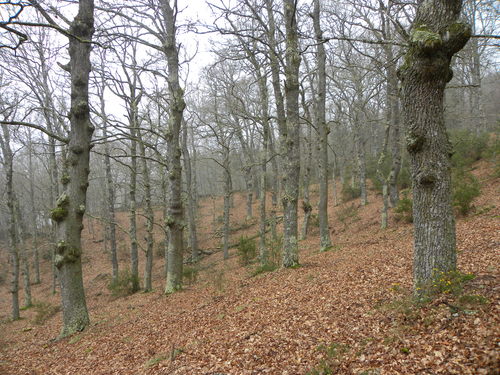
This route starts at the Nature Interpretation Center, in the center of Santa Eulalia de Oscos.
-
Ruta de los Pañeiros
- San Tirso de Abres
- 6 km (solo ida)
- 2 horas
- Baja
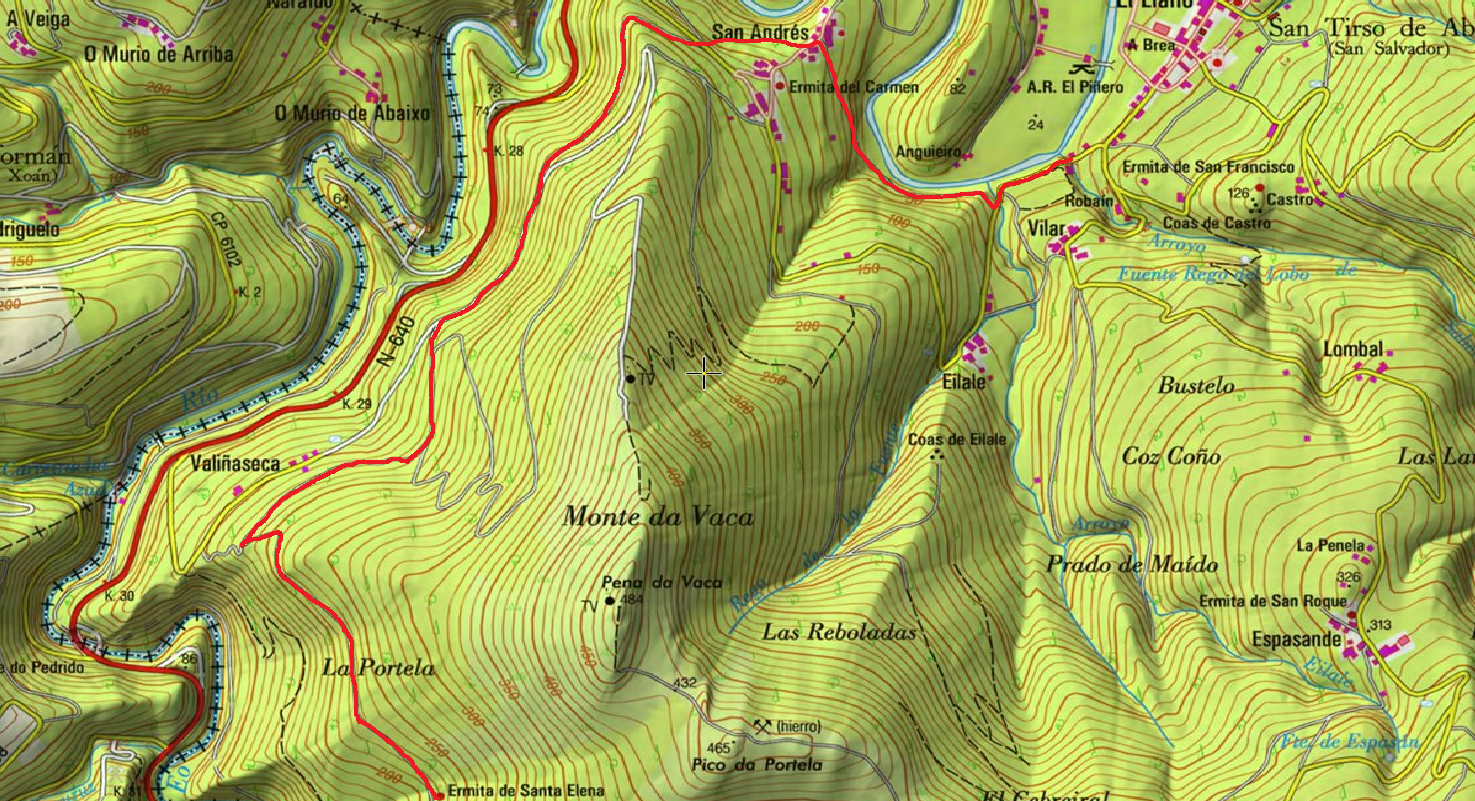
Antiguo Camino de Santiago que acogía a los romeros llegados por la Ría del Eo.
-
Cascada del Cioyo
- Castropol
- 3 km
- 1 - 2 horas
- Media
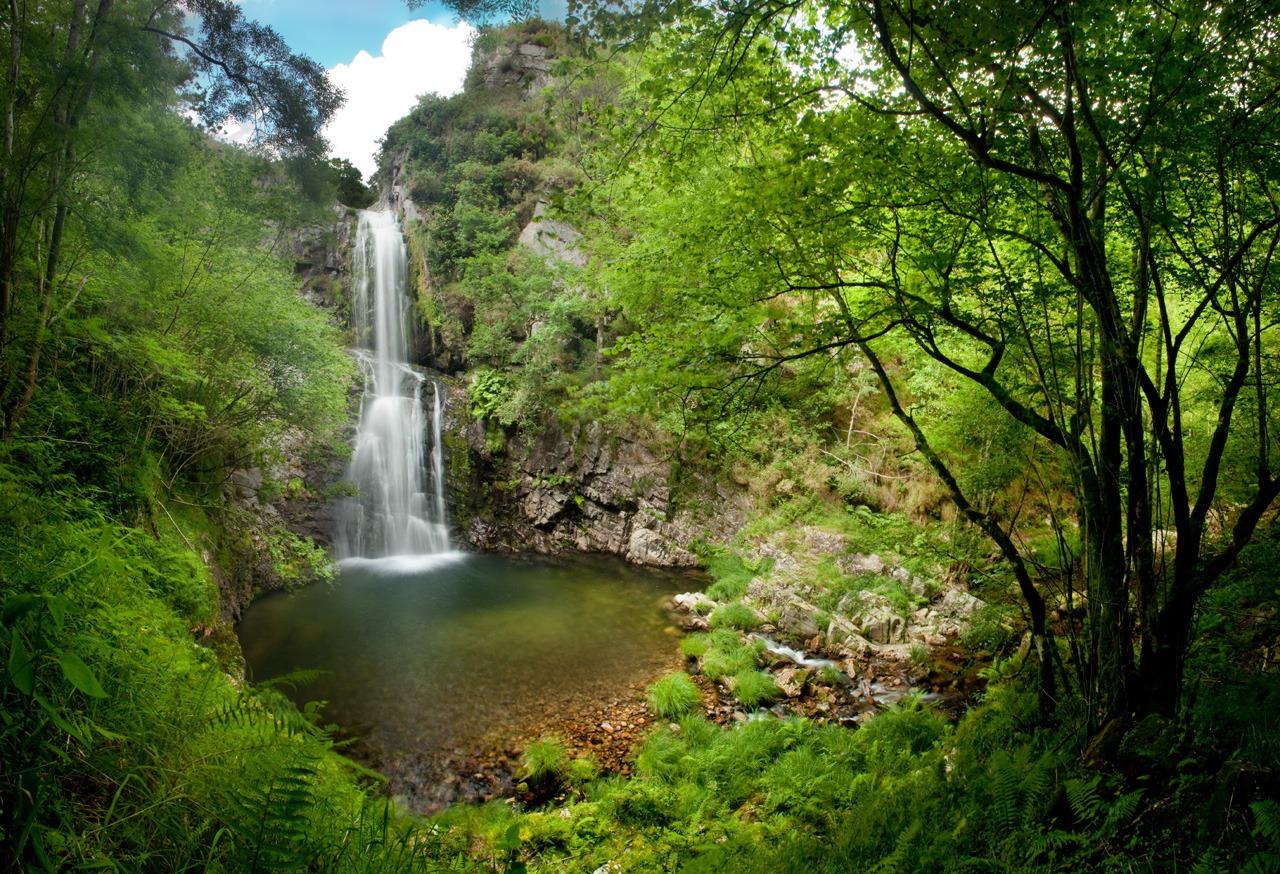
Escondida entre montañas y bosques del occidente asturiano, la Cascada del Cioyo es uno de esos lugares que parecen sacados de un cuento. El sonido del agua al caer, la vegetación exuberante que la rodea y la paz del entorno hacen de este rincón un destino ideal para quienes buscan conectar con la naturaleza. Una caminata entre árboles, pequeñas cascadas y paisajes que invitan a parar y respirar. Al final del recorrido, la gran cascada del Cioyo se abre paso con fuerza entre la roca, regalando una imagen de belleza salvaje difícil de olvidar.
-
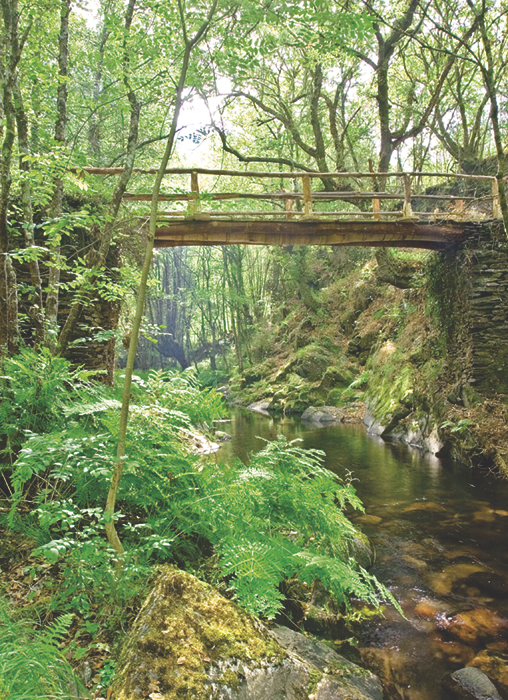
A Mina de As Talladas Route
- Santa Eulalia de Oscos
- 12 km
- 3 hours and 45 minutes
- High average
The route starts in the square of Sta. Eulalia de Oscos descending to the lower part of the village and continuing along a beautiful path surrounded by native forest that leads us to Ferreirela de Baxo, a place where it is worth stopping and visiting the Museo Casa Natal del Marqués de Sargadelos.
-
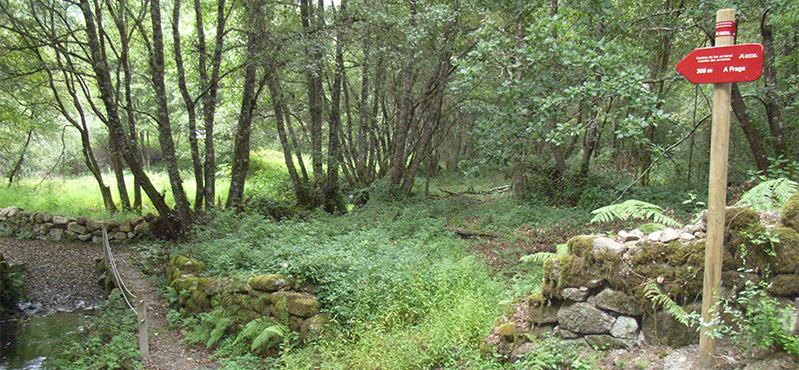
Route of the Muleteers
- San Tirso de Abres
- 15 km round trip
- 5 hours
- Download
To start the route we will move to the village of Espasande and half a kilometer from here in the direction of Taramundi we will see an explanatory panel on the left hand side at the beginning of the route.
-
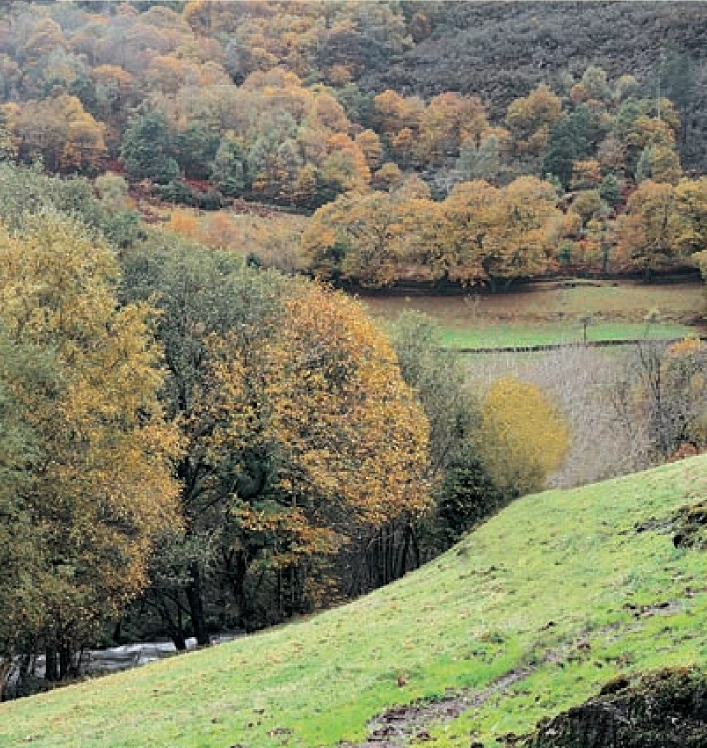
A Coba Route
- Santa Eulalia de Oscos
- 14.5 km
- 5 hours
- Medium - high
We start the route in the beautiful village of Ferreira, one of the best preserved of the municipality, where we can admire the popular architecture of the area while walking along its narrow paths in the shade of centuries-old vines.


