


A Pena do Encanto Route
- San Tirso de Abres
- Circular route
- 4 km
- 1 hour and 20 minutes
- Download
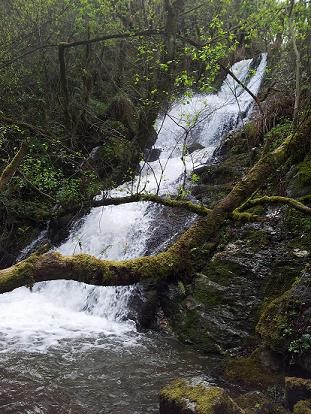
From the municipal capital we go to the exit of the town towards Galicia, finding ourselves on the right hand side with the San Isidro square in whose center is the chapel with the same name, coinciding with the starting point of the route.
We will follow the asphalt road to Vilela de Abajo stretch in which we will observe the municipal capital in the area known as El Llano, seated on a valley surrounded by gentle mountains, crossed from SW to NW by the course of the river Eo, riverbed around which the history and life of the municipality has developed. Already in Vilela we will turn left to enter a dirt track surrounded by forest that brings us closer to the stream of Ramalledo, responsible for watering numerous forests of native flora that settle along its course. Once we go up the stream we reach the area known as Pena do Encanto where a mysterious waterfall flows between water and stone, where the legend of an enchanted lady who comes out of the rock with a golden comb every night of San Juan to bewitch whoever sees her still beats. From this place we start the way back on our steps, arriving at a crossroads where we must turn right to start a slight ascent to Vilela de Arriba, a village through which we must pass before arriving back to the starting point.
Hiking trails
-
Carbayal de Salgueiras Route
- Villanueva de Oscos
 7 km
7 km 2 hours
 Download
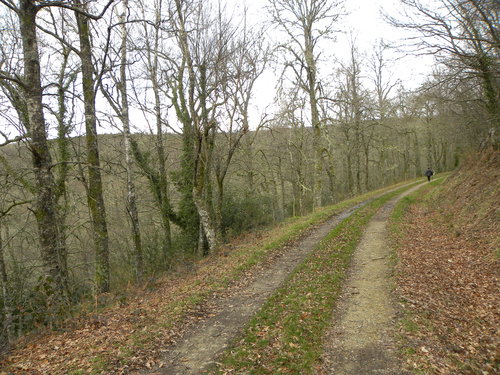
The itinerary begins next to the chapel of Salgueiras, located on the AS-27 road, 6 kilometers from Villanueva. Throughout the tour we must observe the environment around us: the houses, their attached buildings, orchards, meadows, farm implements, forests, to understand the way of life of the locals.
-
Eo estuary path
- Vegadeo
- 4.58 km
- 1 hour and a half
- Download
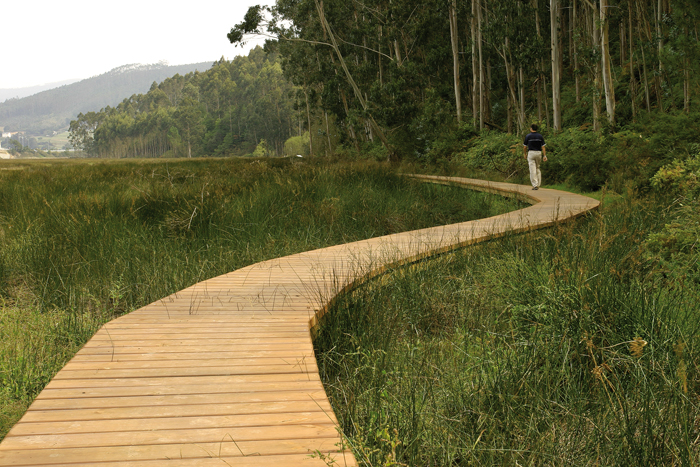
The route starts in the center of Vegadeo in the area known as the Fondrigo, located at the exit to Galicia. From here we start the ascent to Miou, where we will find a crossroads where the path forks and we can go on either side, since from this point the route is circular.
-
Route of Silence
- Villanueva de Oscos
- 12 km
- 5 hours
- High
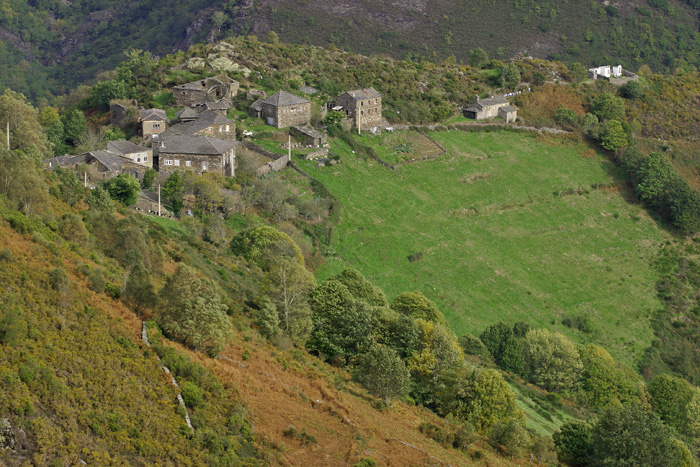
The route starts in San Cristobal, a place where we find numerous samples of popular architecture in its purest state, giving us the sensation of having gone back several centuries in time. From its chapel we see the valley of Rio Ahio covered with a beautiful blanket of native forest that dazzles us with its typical colors.
-
Ruta con Arte
- Santa Eulalia de Oscos
- 10,9 km
- 4 horas
- Baja
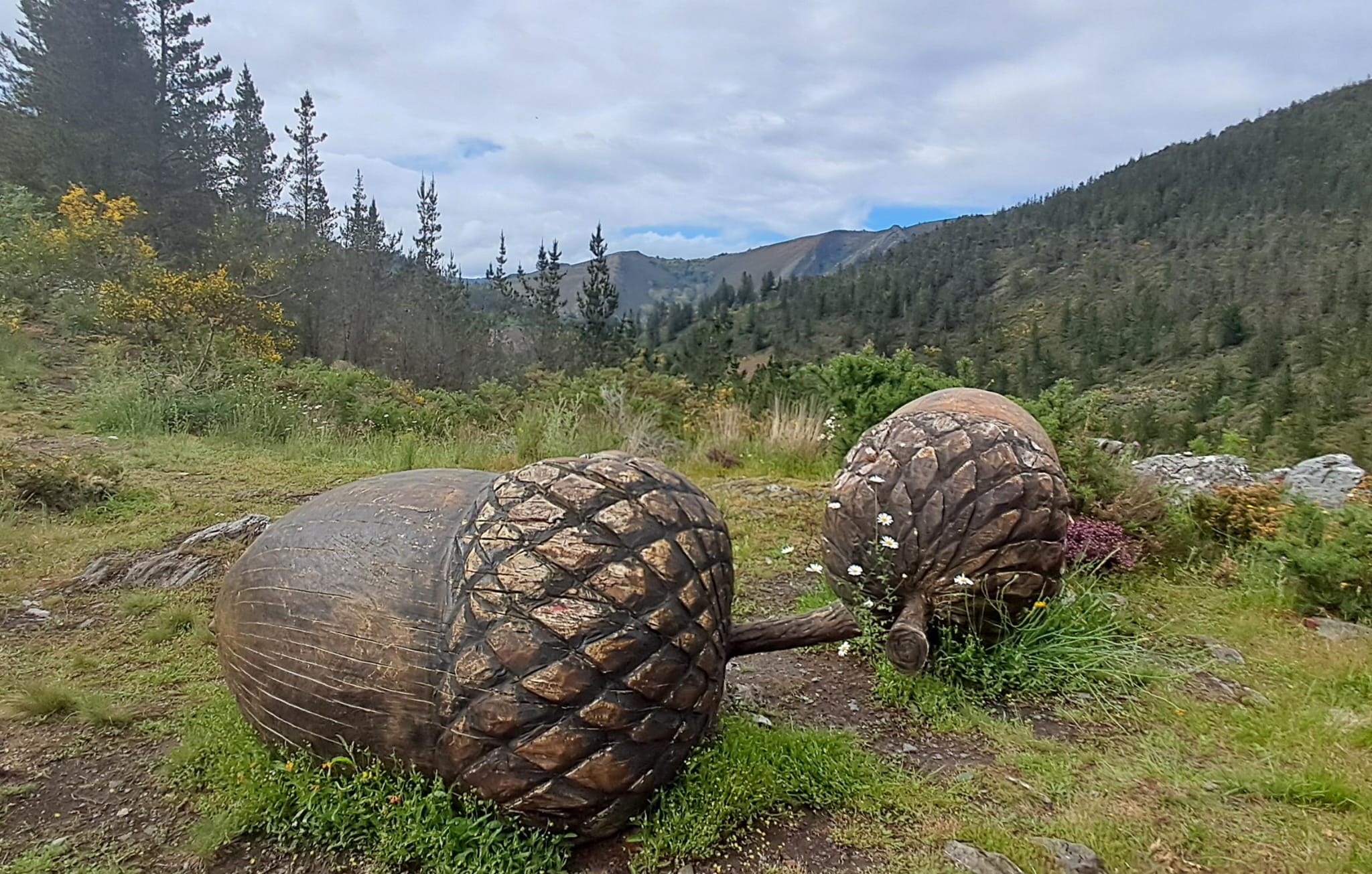
Este proyecto pionero e inédito, pretende impulsar y enriquecer Los Oscos a través de la vertebración artística, ofreciendo una conexión entre artistas, visitantes, naturaleza y tradición. Resaltando la belleza, cultura y tradición de los Oscos. Para ello se ha elegido una ruta circular de 10 Km. Dicha ruta comienza y termina en Santa Eulalia de Oscos.
-
Forest Route
- Villanueva de Oscos
- 8 km
- 2 hours and 45 minutes
- Download
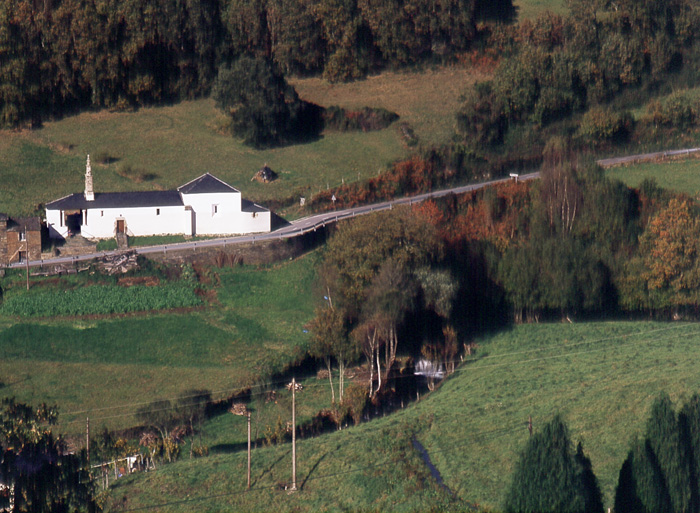
The route starts in Villanueva, capital of the council, from where we leave in the direction of Santa Eufemia where there is still a beautiful chapel of popular baroque style built between the seventeenth and eighteenth centuries that deserves to be visited. Continuing the itinerary along the road and after about three hundred meters of walking, we reach the Castañeira Bridge, and after crossing it we must take a path that goes off to the right, reaching a splendid birch forest next to the abandoned farmhouse of Abilleira.
-
Route of the Mills
- Taramundi
- 10.7 km
- 4 hours
- Download
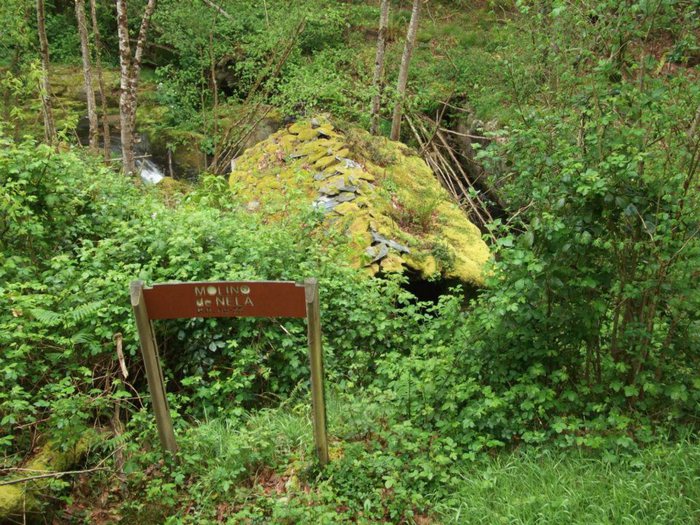
The route begins in the upper part of the village of Bres through a wide dirt road that leads to the Guxo mill, in excellent condition and also has in its vicinity a mini power plant.


