


Route of the Mills
- Taramundi
- Circular route
- 10.7 km
- 4 hours
- Download
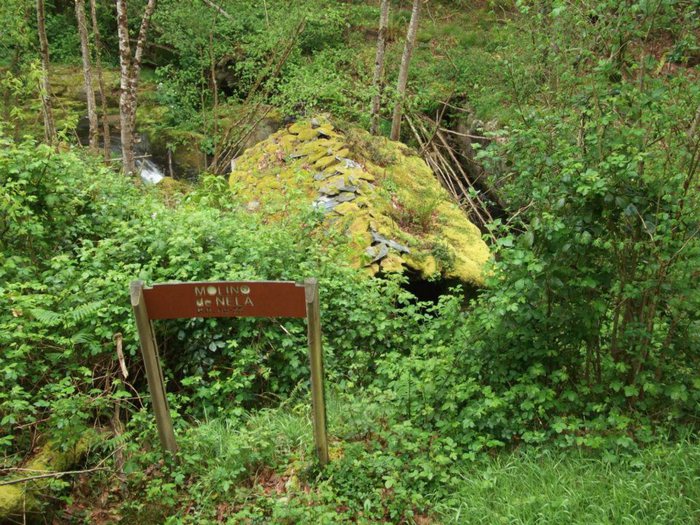
The route begins in the upper part of the village of Bres through a wide dirt road that leads to the Guxo mill, in excellent condition and also has in its vicinity a mini power plant.
The route continues along a small path leaving the stream on the right until you reach a wooden bridge that we must cross to start the ascent through a chestnut grove to reach the Chao do Cobo, an area where it is common to find traces of wild boar. The path continues ascending through Cabaza until reaching the Teixo, crossing meadows and small oak forests. From the top of Teixo, on clear days, the views of the north of the council (Sela de Entorcisa, Sela de Fabal, etc) are unbeatable. The itinerary passes through Brataramundi and after a steep descent we reach the Molino Viejo and the Molino de Nela, both of which are in a bad state of preservation due to disuse. These hydraulic mills were once used to grind corn, wheat, oats and rye, cereals used to feed people and animals. From this point a slight ascent begins by a nice path in which oaks and blueberries abound on both sides, arriving at a wider dirt track that in descending sense takes us to the starting point.
Hiking trails
-
A Mina de As Talladas Route
- Santa Eulalia de Oscos
 12 km
12 km 3 hours and 45 minutes
 High average
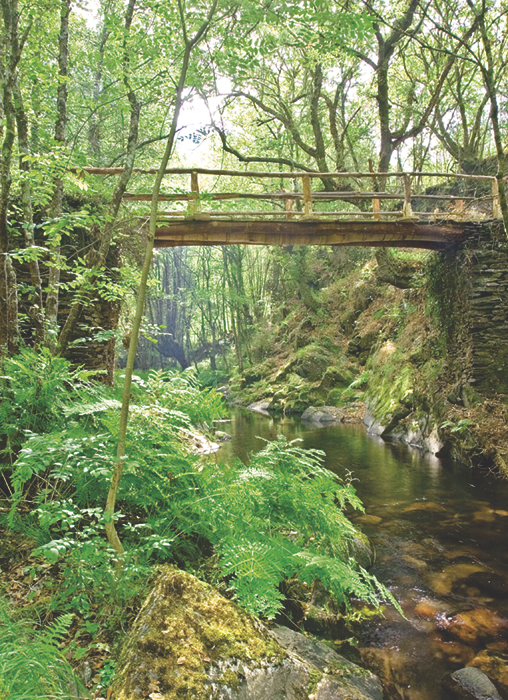
The route starts in the square of Sta. Eulalia de Oscos descending to the lower part of the village and continuing along a beautiful path surrounded by native forest that leads us to Ferreirela de Baxo, a place where it is worth stopping and visiting the Museo Casa Natal del Marqués de Sargadelos.
-

Ruta Os Cortíos
- Santa Eulalia de Oscos
- 8,47 km
- 4 horas
- Baja
Esta ruta comienza en Barcia (Asturias) donde disponemos de un aparcamiento público para dejar nuestro coche a escasos metros del inicio.
-
Mount Marón and Ascuita route
- San Martín de Oscos
- 9 km
- 2 hours
- Download
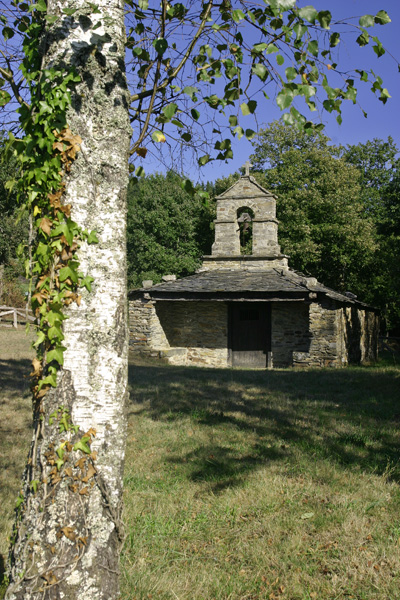
We begin the route in San Martín de Oscos where we can see the parish church, with a Latin cross plan, large porticoed space and inscription of 1828. To the right of the facade we observe one of the most characteristic hórreos of the Oscos with a mixed roof (slate and straw), which corresponds to the primitive models. In front of the church we have the mansion of the Guzmanes, an old manor house of the XVIII century, which preserves in the portico of its main entrance a coat of arms carved in stone. We cross the bridge that crosses the San Martín river to begin the ascent to Mount Marón, entering a small forest of birch and oak trees, which make our walk even more pleasant.
-
San Tirso de Abres – Vegadeo Route
- San Tirso de Abres
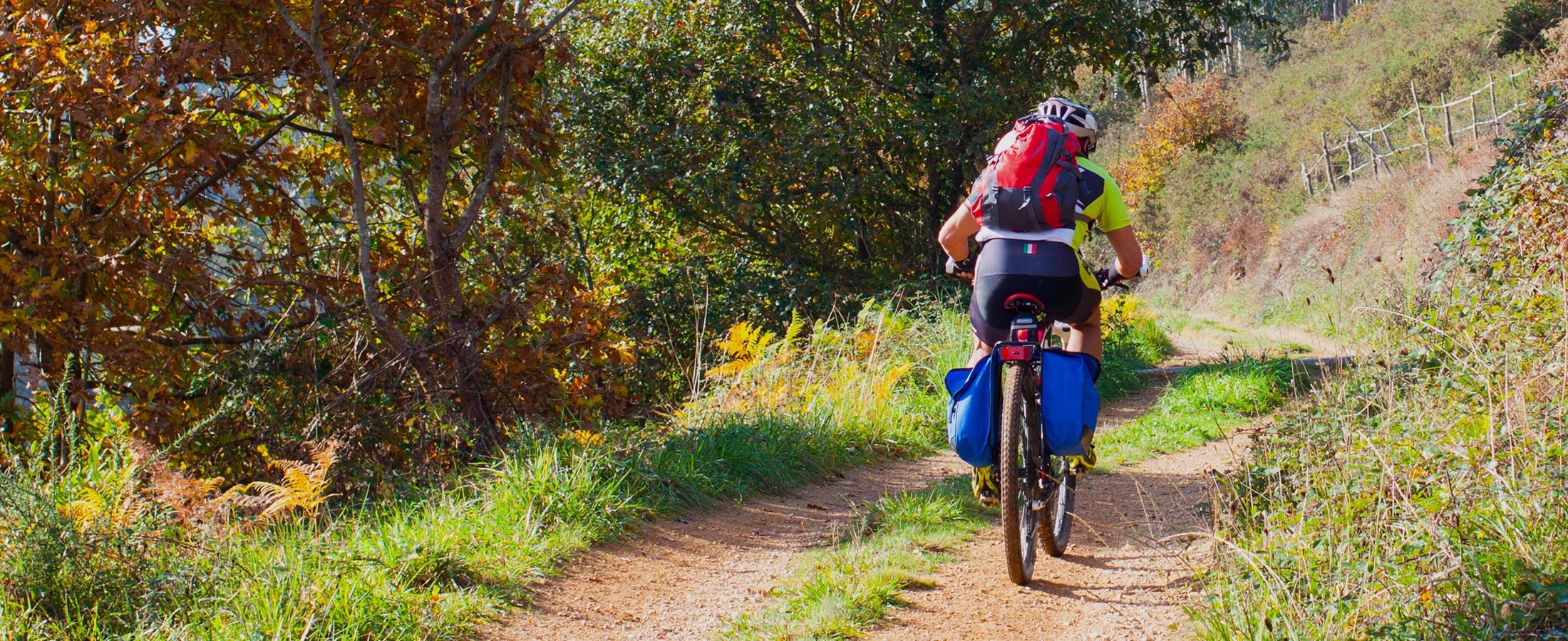
Download the route in PDF and KML and follow the route with your mountain bike or MTB.
-
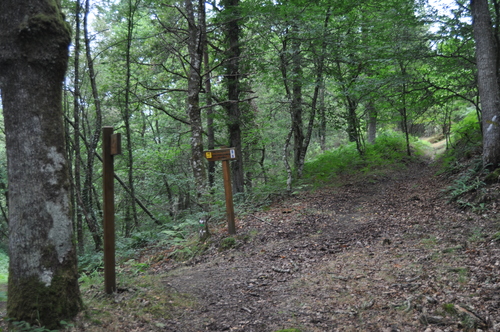
As Zarras Route
- Villanueva de Oscos
- 3.5 km
- 1 hour and 50 minutes
- Download
The route begins in Santa Eufemia, shortly after passing the Ecomuseo del Pan in the direction of Pacios. We enter a small path through a native forest populated by oak, birch, holly and chestnut trees.
-
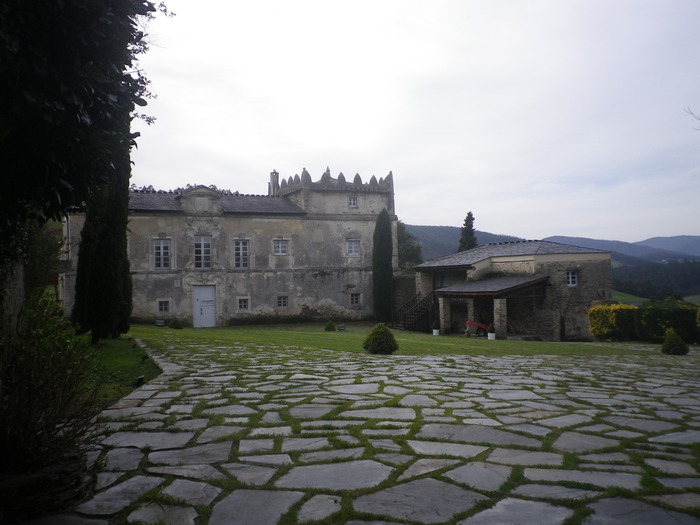
Route of the “Estraperlo
- Vegadeo
- 8.2 km
- 2 hours and 30 minutes
- Download
The route begins in Louteiro, which is accessed after taking a detour to the left shortly before leaving Vegadeo in the direction of Galicia. From the chapel of this village begins the route once used by pilgrims and pilgrims on pilgrimage to Santiago de Compostela, who avoided the main roads to pass products from Galicia to Asturias.


