


As Zarras Route
- Villanueva de Oscos
- Circular route
- 3.5 km
- 1 hour and 50 minutes
- Download
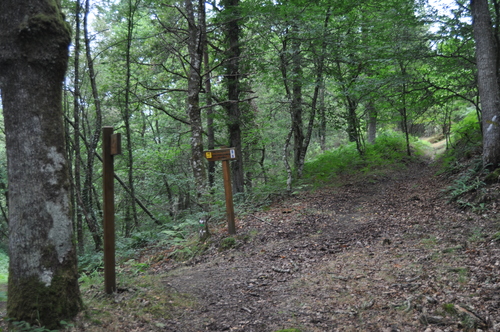
The route begins in Santa Eufemia, shortly after passing the Ecomuseo del Pan in the direction of Pacios. We enter a small path through a native forest populated by oak, birch, holly and chestnut trees.
The path runs parallel to a traditional stone enclosure very characteristic of the region: quartzite wall topped by a row of vertical stones. After a stretch of descent we cross the river by a wooden footbridge. We continue through meadows and woods the path that leads to Vilarello. Arriving at the village we can make a stop to quietly admire its magnificent stone architecture. Large houses that tell us of a past of greater agricultural and livestock activity, of greater bustle, laughter and noise. Today we can enjoy its tranquility and silence and imagine an endless number of stories that suggests us the mute stone. We continue our way through the mountain and soon we cross the route of the forests and the green path of Agüeira in the oak grove of Pacios, after crossing it we come out to the Pacios-Santa Eufemia road, we continue along it to the right and after a short stretch we arrive back to the beginning of the route. Before leaving Santa Eufemia we recommend a visit to the Ecomuseum of Bread, through which you will understand the process of elaboration of this basic food, from the sowing of the cereal to the kneading and baking in the oven of the house.
Hiking trails
-
Water Route
- Taramundi
 14 km
14 km 4 hours and 30 minutes
 Download
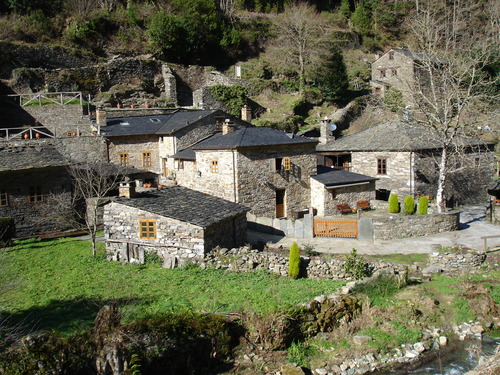
Its fourteen kilometers allow us to enjoy the water and its use for centuries in the rural environment. From the lower part of Taramundi we take a road that leads us to Mazonovo, where we can visit the Museum of Mills.
-
Mount Marón and Ascuita route
- San Martín de Oscos
- 9 km
- 2 hours
- Download
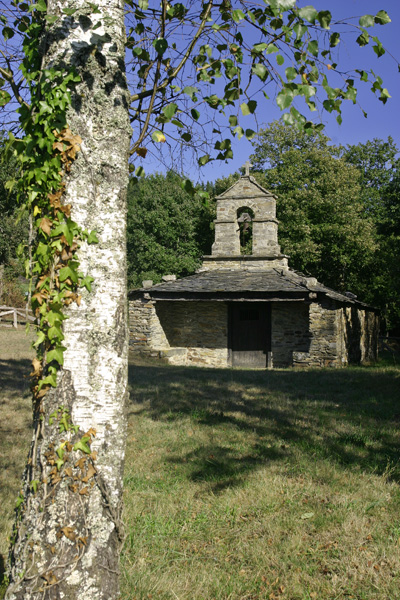
We begin the route in San Martín de Oscos where we can see the parish church, with a Latin cross plan, large porticoed space and inscription of 1828. To the right of the facade we observe one of the most characteristic hórreos of the Oscos with a mixed roof (slate and straw), which corresponds to the primitive models. In front of the church we have the mansion of the Guzmanes, an old manor house of the XVIII century, which preserves in the portico of its main entrance a coat of arms carved in stone. We cross the bridge that crosses the San Martín river to begin the ascent to Mount Marón, entering a small forest of birch and oak trees, which make our walk even more pleasant.
-
A Seimeira Route
- Santa Eulalia de Oscos
- 8 km round trip
- 3 hours
- Download
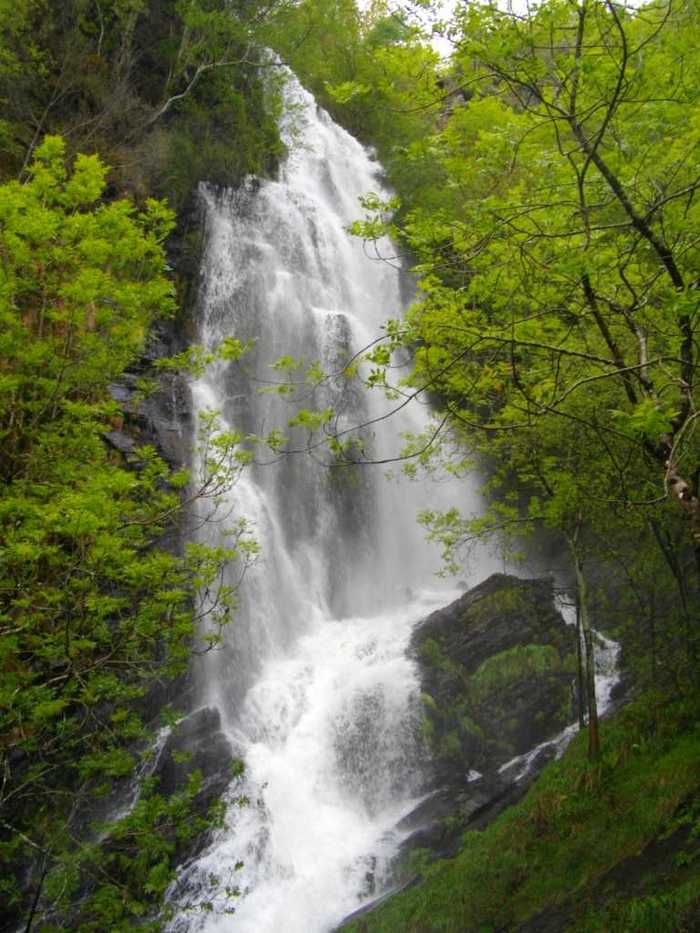
The route begins in the recreational area of Pumares; we cross the road and head parallel to the river to Pumares, a village of old ferreira activity, where we can still see the remains of an old mallet. From here, along a marked path, and leaving the river Agüeira to our left, we continue a slight ascent into a legendary forest characterized by riparian species (alders, ashes, willows, and hazelnut trees) and by oaks and chestnut trees that with their whimsical shapes are true monuments.
-
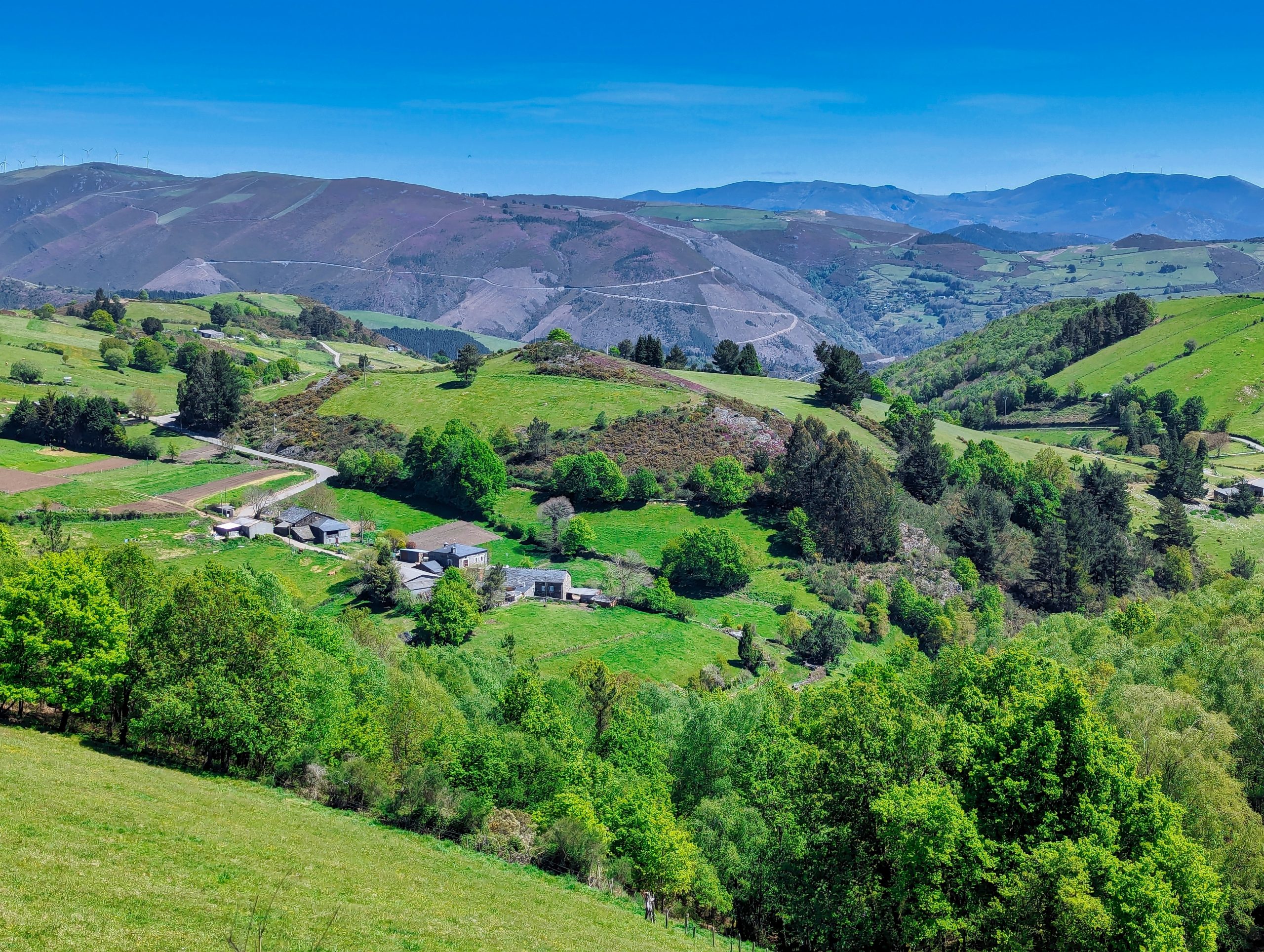
Ruta Piorno a os Fornos
- San Martín de Oscos
- 5,5 km
- 2h 30m
- Baja
Iniciamos la ruta en el pueblo de Piorno, que se recomienda recorrer porque conserva excelentes muestras de arquitectura tradicional de los Oscos en piedra, pizarra y madera.
-
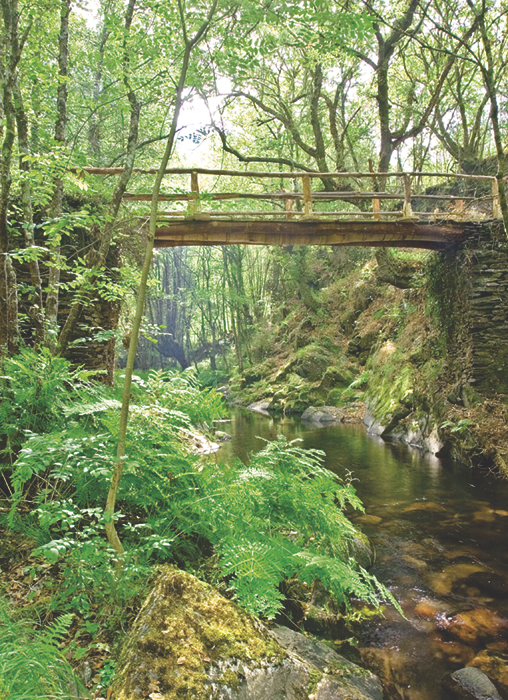
A Mina de As Talladas Route
- Santa Eulalia de Oscos
- 12 km
- 3 hours and 45 minutes
- High average
The route starts in the square of Sta. Eulalia de Oscos descending to the lower part of the village and continuing along a beautiful path surrounded by native forest that leads us to Ferreirela de Baxo, a place where it is worth stopping and visiting the Museo Casa Natal del Marqués de Sargadelos.
-
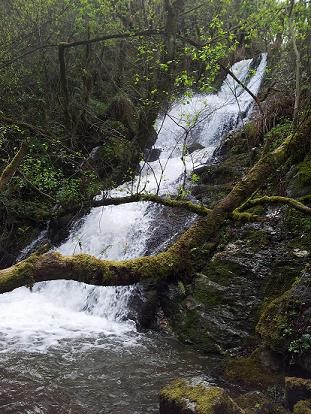
A Pena do Encanto Route
- San Tirso de Abres
- 4 km
- 1 hour and 20 minutes
- Download
From the municipal capital we go to the exit of the town towards Galicia, finding ourselves on the right hand side with the San Isidro square in whose center is the chapel with the same name, coinciding with the starting point of the route.


