


Ruta Os Cortíos
- Santa Eulalia de Oscos
- Ruta circular
- 8,47 km
- 4 horas
- Baja
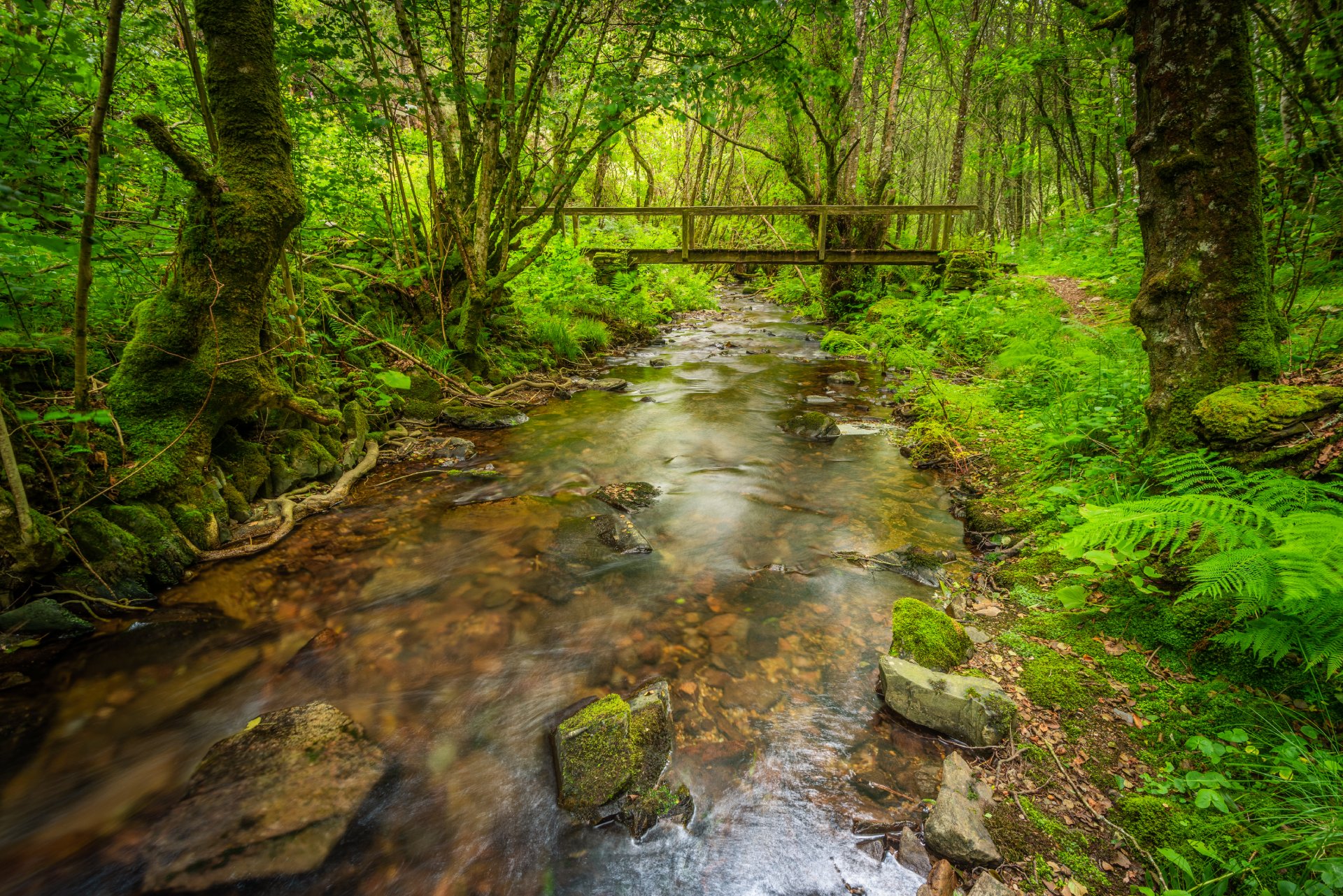
Esta ruta comienza en Barcia (Asturias) donde disponemos de un aparcamiento público para dejar nuestro coche a escasos metros del inicio.
Comenzamos por un sendero paralelo al río Barcia atravesando el pueblo hasta encontrarnos con un pequeño puente, donde justo se juntan los tramos de ida y vuelta.
Seguimos caminando por un frondoso bosque de castaños y carballos acompañados del sonido del río que pasa a nuestra izquierda.
La vegetación es abundante y muy atractiva, típica de ribera donde los suelos están cubiertos de musgo acompañándonos siempre la sombra que forman los abundantes árboles autóctonos.
Hiking trails
-
Route of the “Estraperlo
- Vegadeo
 8.2 km
 2 hours and 30 minutes
 Download
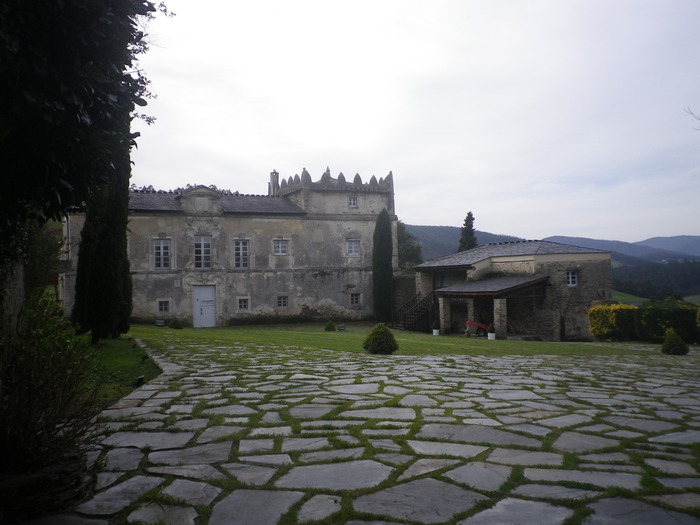
The route begins in Louteiro, which is accessed after taking a detour to the left shortly before leaving Vegadeo in the direction of Galicia. From the chapel of this village begins the route once used by pilgrims and pilgrims on pilgrimage to Santiago de Compostela, who avoided the main roads to pass products from Galicia to Asturias.
-
Eo estuary path
- Vegadeo
- 4.58 km
- 1 hour and a half
- Download
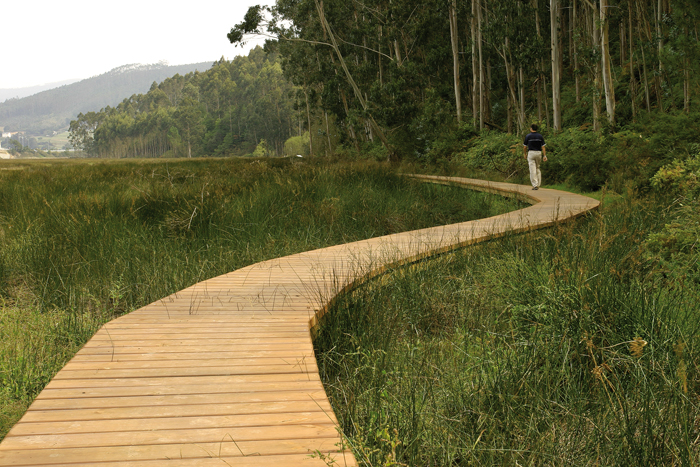
The route starts in the center of Vegadeo in the area known as the Fondrigo, located at the exit to Galicia. From here we start the ascent to Miou, where we will find a crossroads where the path forks and we can go on either side, since from this point the route is circular.
-
Cascada del Cioyo
- Castropol
- 3 km
- 1 - 2 horas
- Media
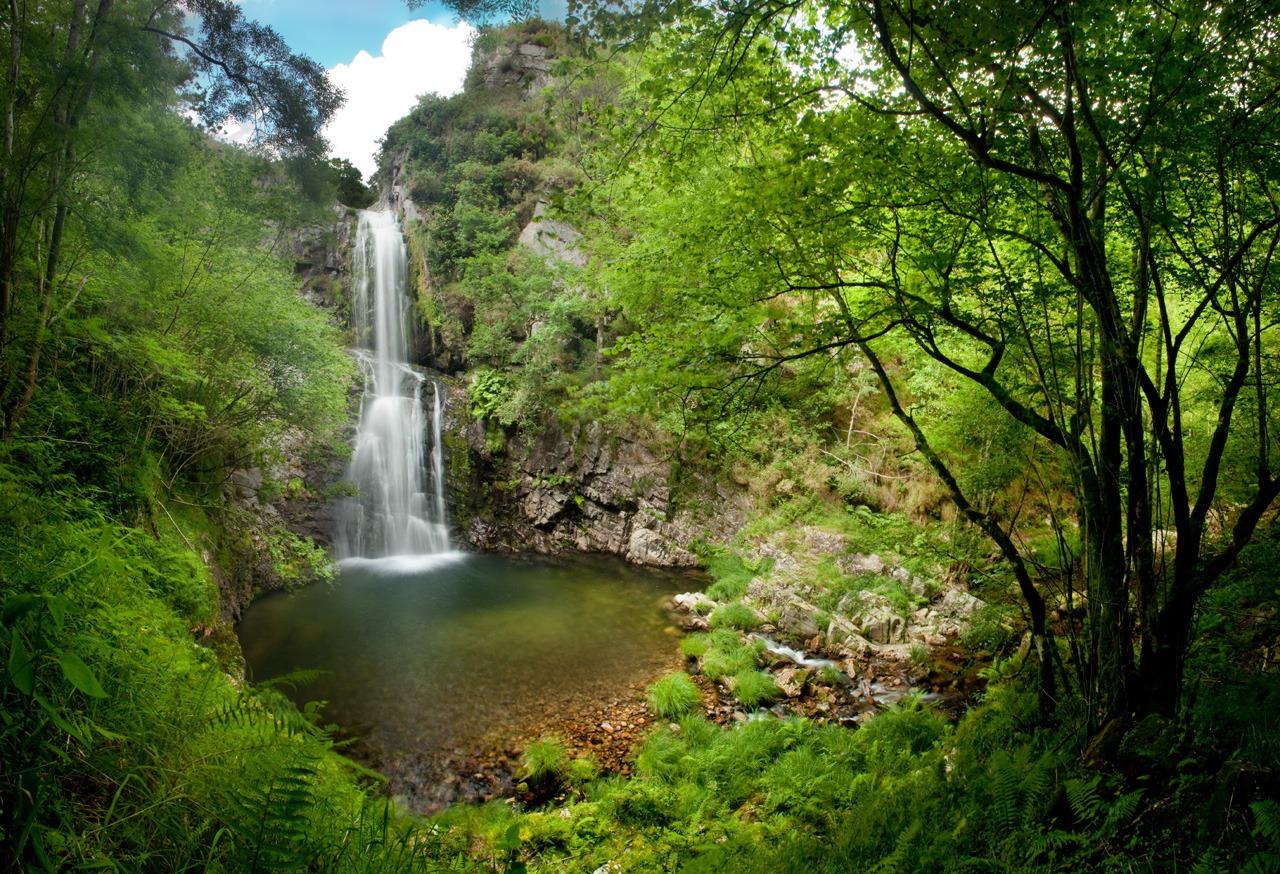
Escondida entre montañas y bosques del occidente asturiano, la Cascada del Cioyo es uno de esos lugares que parecen sacados de un cuento. El sonido del agua al caer, la vegetación exuberante que la rodea y la paz del entorno hacen de este rincón un destino ideal para quienes buscan conectar con la naturaleza. Una caminata entre árboles, pequeñas cascadas y paisajes que invitan a parar y respirar. Al final del recorrido, la gran cascada del Cioyo se abre paso con fuerza entre la roca, regalando una imagen de belleza salvaje difícil de olvidar.
-
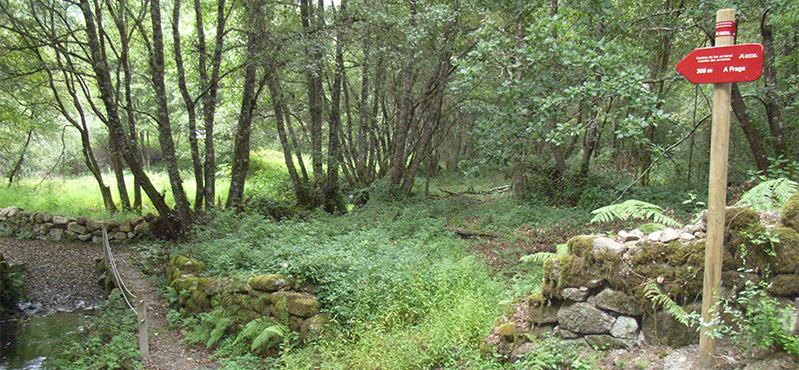
Route of the Muleteers
- San Tirso de Abres
- 15 km round trip
- 5 hours
- Download
To start the route we will move to the village of Espasande and half a kilometer from here in the direction of Taramundi we will see an explanatory panel on the left hand side at the beginning of the route.
-
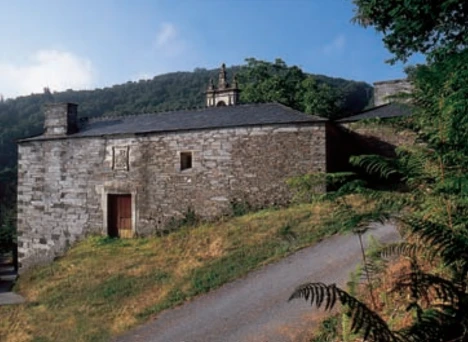
Mon Route
- San Martín de Oscos
- 12.6 km
- 4.5 hours
- Media
The itinerary begins in the village of A Revoqueira, three kilometers from San Martín.
-
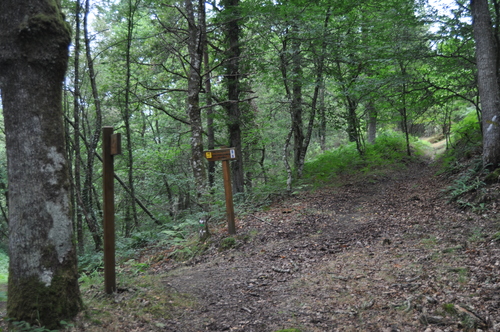
As Zarras Route
- Villanueva de Oscos
- 3.5 km
- 1 hour and 50 minutes
- Download
The route begins in Santa Eufemia, shortly after passing the Ecomuseo del Pan in the direction of Pacios. We enter a small path through a native forest populated by oak, birch, holly and chestnut trees.


