


Route of Silence
- Villanueva de Oscos
- Circular route
- 12 km
- 5 hours
- High
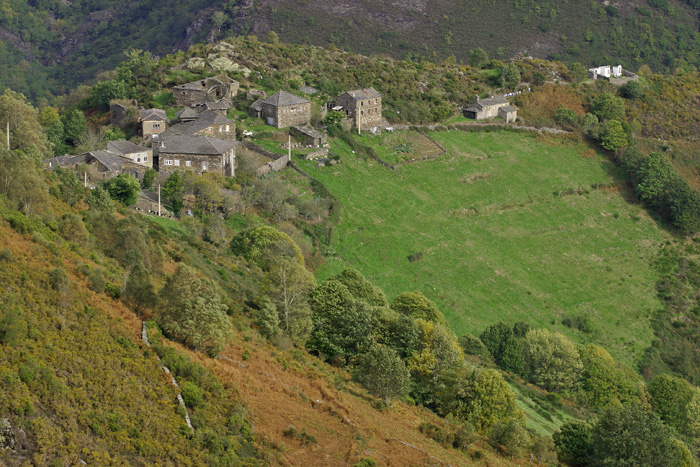
The route starts in San Cristobal, a place where we find numerous samples of popular architecture in its purest state, giving us the sensation of having gone back several centuries in time. From its chapel we see the valley of Rio Ahio covered with a beautiful blanket of native forest that dazzles us with its typical colors.
We began our journey to Mourelle entering a spectacular forest of chestnut, oak and strawberry trees, finding specimens of all ages and shapes, accompanied by numerous corripas (circular stone constructions of small height in which the hedgehogs of the chestnut trees were stored).
After Mourelle we ascend to the peak of Balongo, an authentic natural viewpoint, where it is worth stopping to contemplate the landscape and to regain strength.
Continuing along the road and once past Brusquete, we enter again into a grandiose natural tunnel formed by the treetops that make us feel in a fairytale setting where animals and plants live freely.
After a steep descent we cross the Ahío River that tirelessly carries the waters of the Sierra de la Bobia to the Agüeira River, maintaining in its path an important riparian ecosystem in which we can find a great variety of species.
Halfway up the slope and in a slight ascent we will reach San Cristobal, the starting and ending point of the route.
Hiking trails
-
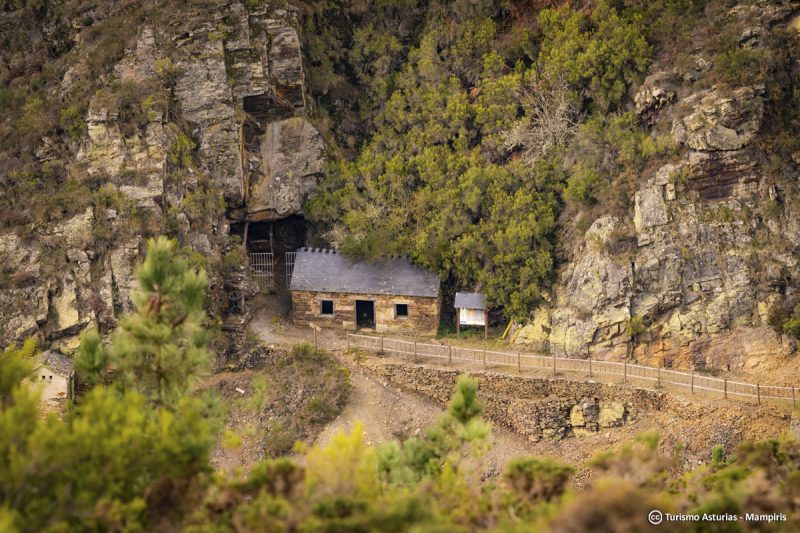
San Martín de Oscos Mining Route
- San Martín de Oscos
 30,618 Km
Download the route in PDF and KML and follow the route with your mountain bike or MTB. With different levels of difficulty, duration, slope and length. If you don’t have a bike you can rent one.
-
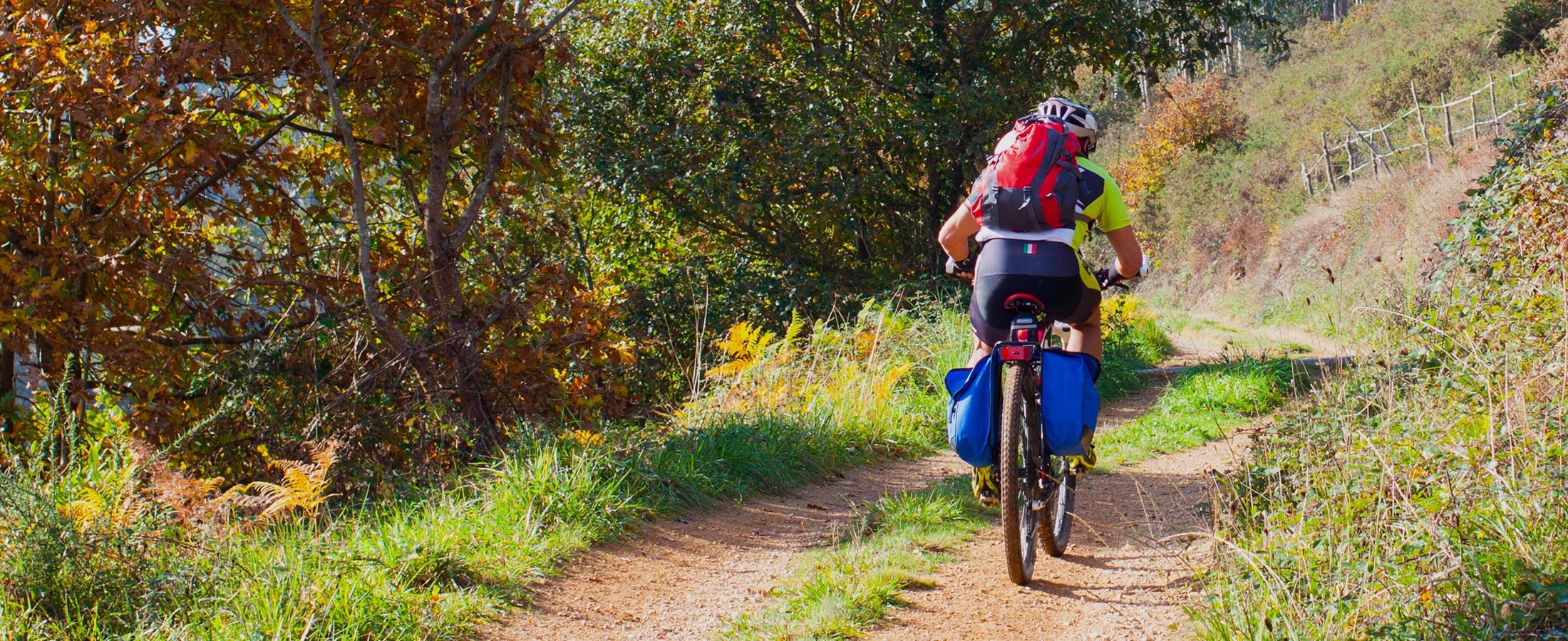
San Tirso de Abres – Vegadeo Route
- San Tirso de Abres
Download the route in PDF and KML and follow the route with your mountain bike or MTB.
-
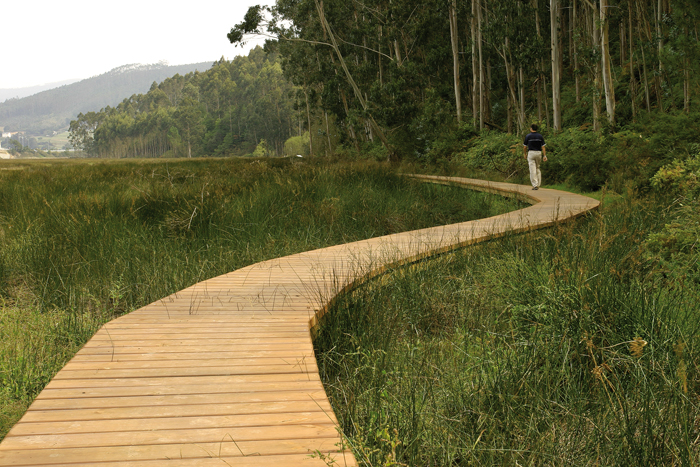
Eo estuary path
- Vegadeo
- 4.58 km
 1 hour and a half
 Download
The route starts in the center of Vegadeo in the area known as the Fondrigo, located at the exit to Galicia. From here we start the ascent to Miou, where we will find a crossroads where the path forks and we can go on either side, since from this point the route is circular.
-
Route of the “Estraperlo
- Vegadeo
- 8.2 km
- 2 hours and 30 minutes
- Download
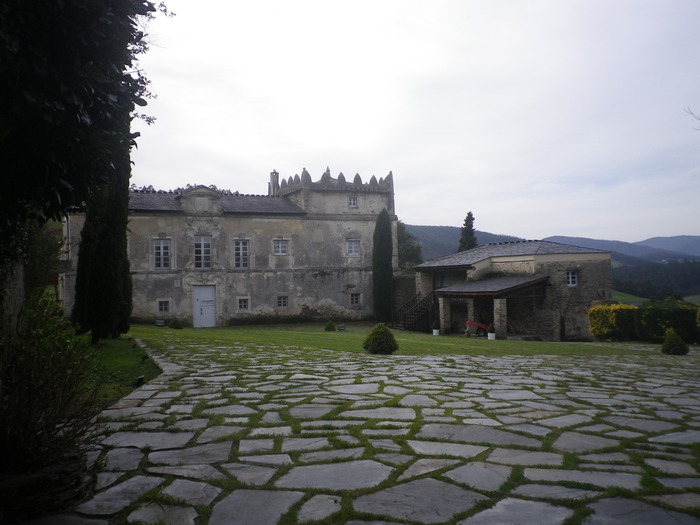
The route begins in Louteiro, which is accessed after taking a detour to the left shortly before leaving Vegadeo in the direction of Galicia. From the chapel of this village begins the route once used by pilgrims and pilgrims on pilgrimage to Santiago de Compostela, who avoided the main roads to pass products from Galicia to Asturias.
-
Railroad Route
- San Tirso de Abres
- 15 km
- 5 hours
- Download
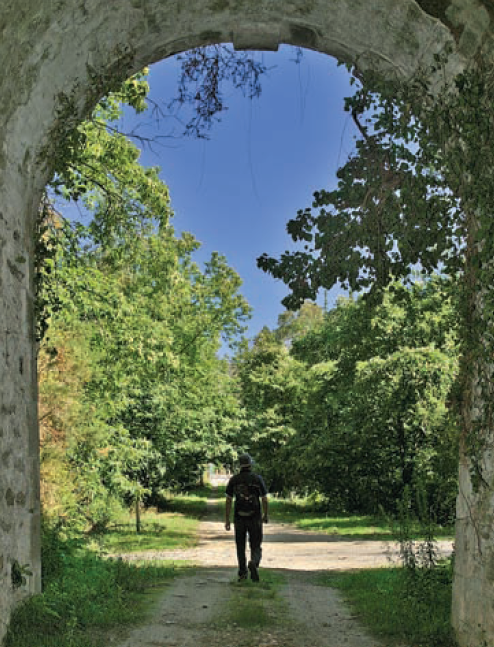
We start the walk in the old station of San Tirso de Abres, today restored for private housing, finding the first of the six tunnels just 300 m away, continuing next to the river Eo enjoying every moment of great panoramic views of the riverbed, of incalculable ecological and fish value, in which abound a large number of aquatic species, the most characteristic being trout, lamprey and salmon. Later the path crosses the N-640 road and leads us to an old power station built in 1932, located just before crossing another of the tunnels drilled in the rock, which leaves us close to the pedestrian walkway over the river Eo.
-
Ruta del Esqueicer
- Santa Eulalia de Oscos
- 8,6 Km
- 3 horas
- Media
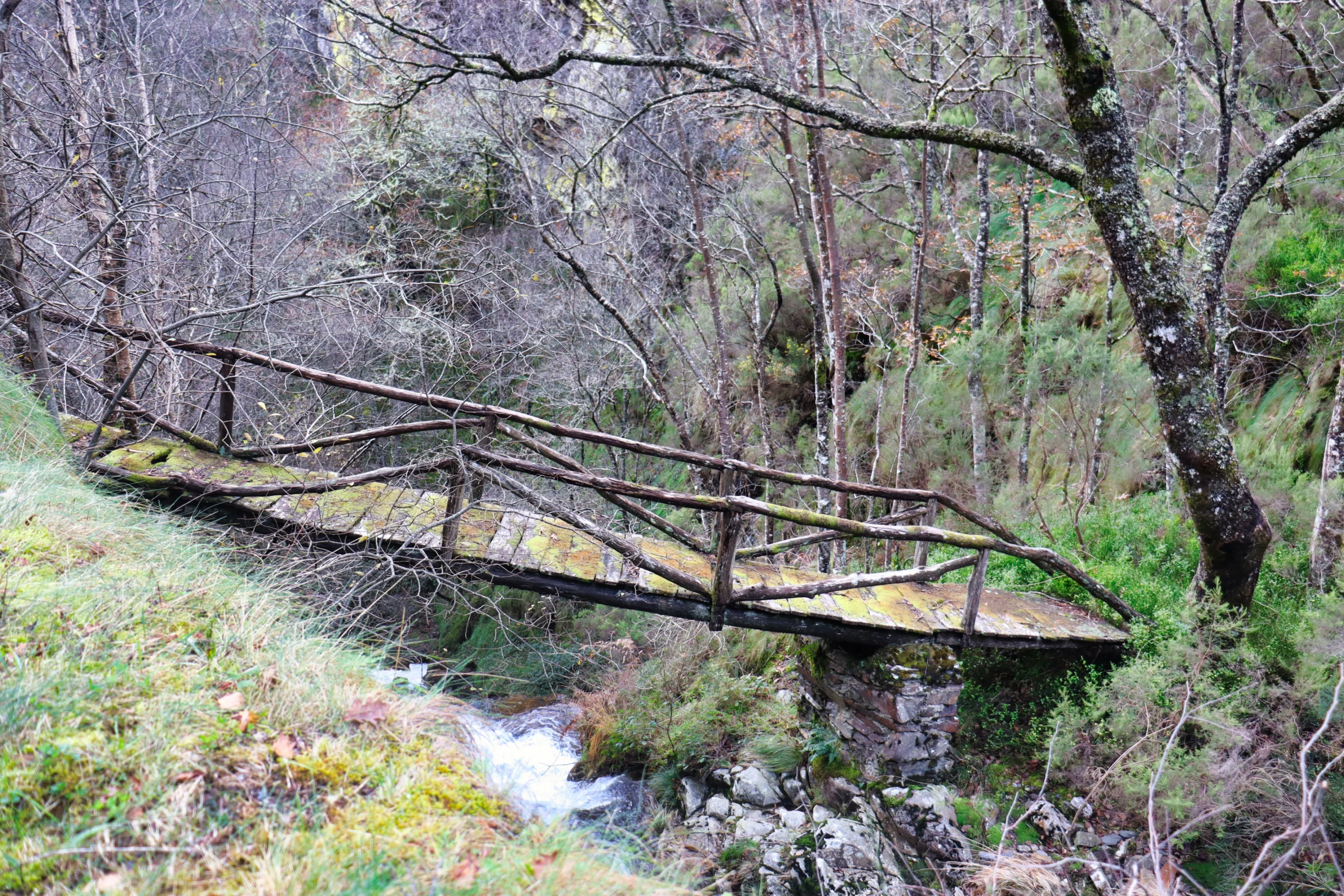
La ruta arranca en una curva situada entre el puente y la aldea de Sualleiro, justo al lado de los apartamentos que llevan ese mismo nombre. Inaugurada en agosto de 2020, se presenta bien cuidada y correctamente señalizada con flechas pintadas en árboles y piedras.


