


- Home
- What to visit?
- Os Teixois Ethnographic Ensemble
Os Teixois Ethnographic Ensemble
- Taramundi
- Ethnographic set
Os Teixois is one of the most interesting ethnographic sites in Asturias, where we can find several hydraulic devices recovered and available to anyone who wishes to visit them.
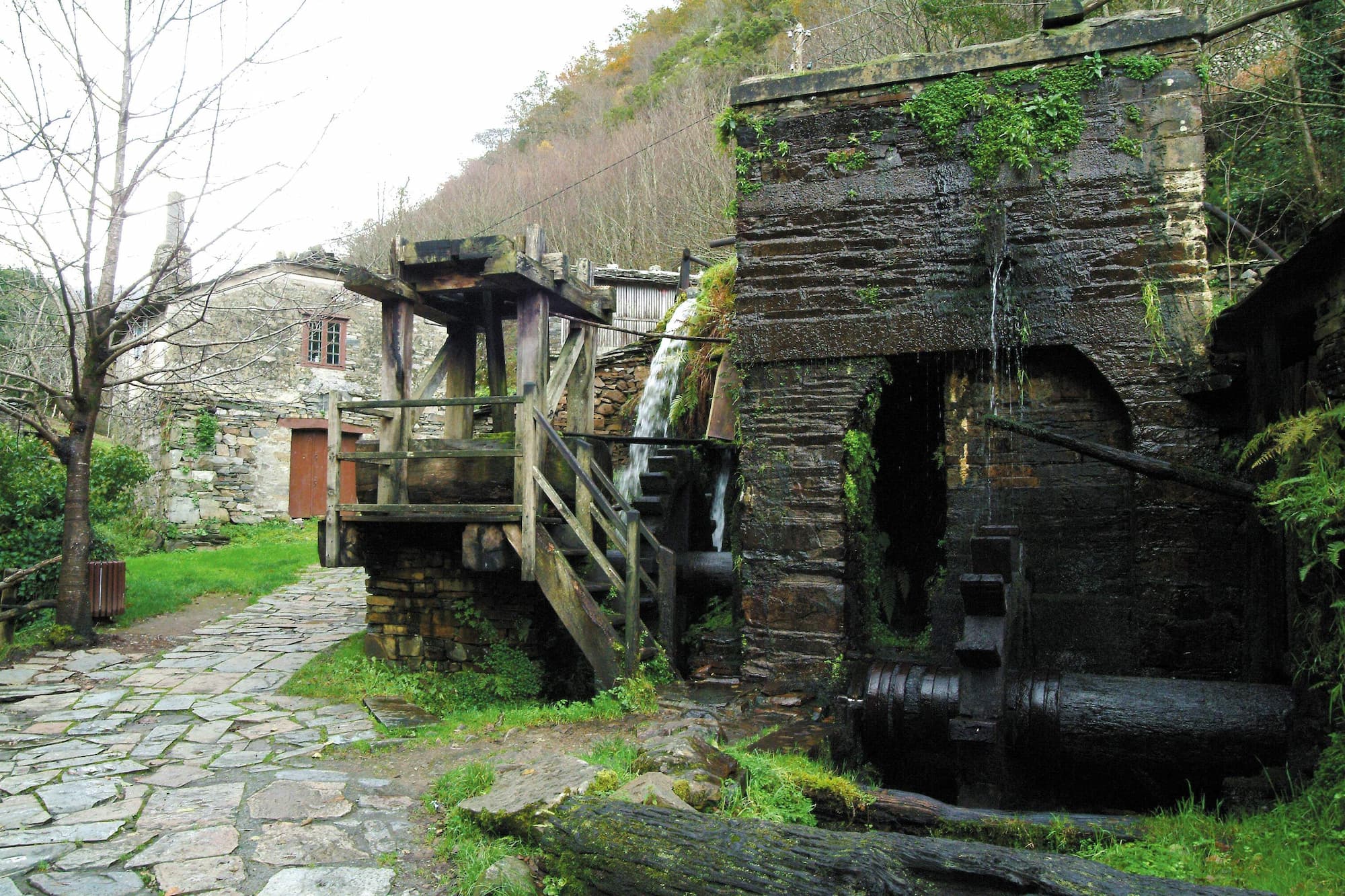
The Os Teixois mallet is already documented in the XVIII century in the Cadastre of the Marquis de la Ensenada. It was used to stretch the iron used to make field tools and other utensils that were later sold at fairs: braziers, frying pans, saucepans, ladles, buckets, bread pans…
The same force of water that flows down from the stream of Las Mestas and that is used to move the mallet, is used to power the mill; the ownership of the mill was shared among several neighbors so that its use was organized according to the system called “quendas” or “calendas”, under which each owner had its use according to the greater or lesser property he had. This same system was also used for the use of the mazo.
When the fabrics or cloths woven in the looms had to have a greater resistance, or a thicker consistency, due to their intended use, they were subjected to a new operation called “abatanado” or “enfurtido”, carried out in the “batanes”, “pisas” or “pisones”, crude wooden machines moved by hydraulic energy and located in the proximities of the rivers whose mission was to produce the beating of the fabrics by means of mallets or “porros”.
The sharpening wheel is located in the shed attached to the base of the bench in order to take advantage of the same water flow used in the rest of the hydraulic devices. It represents a degree of evolution with respect to the traditional hand-operated one and it was used to sharpen all the cutting tools used in the fields.
The visit to the museum is only guided, for this we have a schedule of access, its duration is approximately 40 minutes. In case the group is full, the visit will take place before the scheduled time. Groups are very small due to capacity. No reservations are made. Tickets are sold on a first come, first served basis.
Basic information
- 696 440 640
- See website
- Os Teixois Taramundi
Schedule
July and August:
Monday to Sunday (open to the public from 11:00 to 19:30)
Passes to the museum – access to the museum only during these hours-
11:30 /12:30/13:30 (morning) – 15:30/16:30/17:30/18:30/19:30 (afternoon)
Prices
Adults and children over 10 years old:
4,00€
Children (under 10 years old):
Free
Discounts only for: school children, excursions…
Consult by phone.
Complementary services
Bar and picnic area.
What to see?
-

Carnaval de Verano
- San Tirso de Abres
- Fiestas y Eventos
-
Mazonovo Mallet
- Santa Eulalia de Oscos
- Ethnographic set
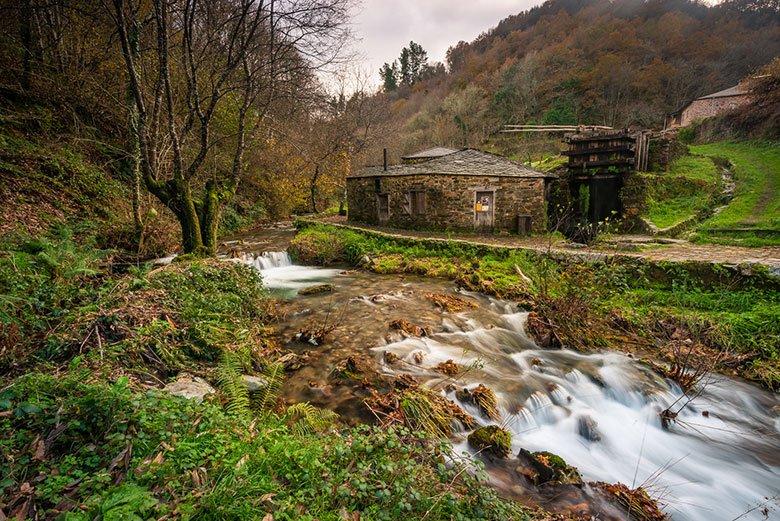
The Mazonovo Mallet is located about 3 km from Santa Eulalia. It is a 17th century mallet active in the 21st century. This set is restored and rehabilitated in its integrity for the understanding of the iron industry. The building of the mallet stands out for being in a state in which it has not suffered great modifications with the passage of time. Here you can forge your own nail and take it as a souvenir.
-
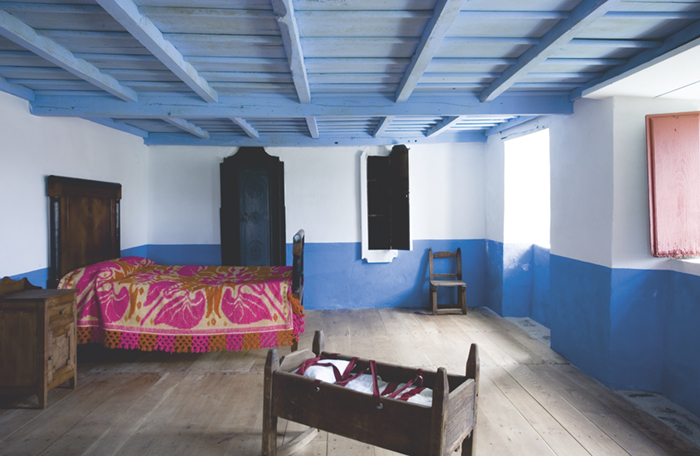
Casa del Marco Interpretation Center “Casa Campesina Museum”.
- San Martín de Oscos
- Museum
In the town of Villarquille (San Martín de Oscos) we find the Casa del Marco, a peasant house with its furniture, tools and implements which shows the way of life of the rural society of the region until the mid-twentieth century.
-
Cabazos
- San Tirso de Abres
- Heritage
-
Los Castros
- San Martín de Oscos
- Heritage
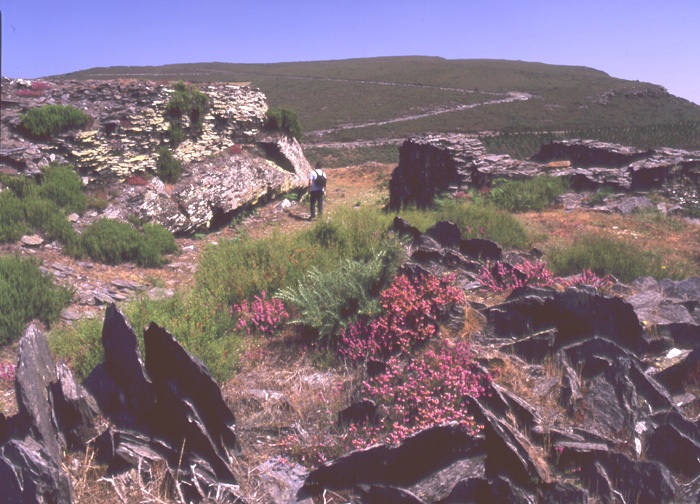
The castros are population centers of an eminently strategic and defensive nature. They are found throughout the northwest of the peninsula (castreña culture). These settlements arise in the transition from the Bronze Age to the Iron Age, reaching its peak during the Second Iron Age.
-
Las Minas
- Villanueva de Oscos
- Mines
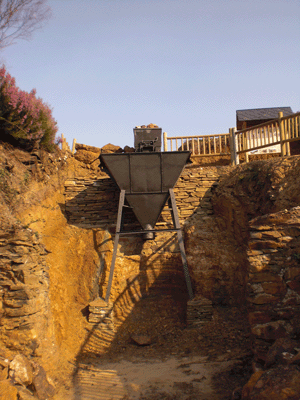
Recently, the Town Council of Villanueva de Oscos, with the collaboration of the Principality of Asturias, has recovered and rehabilitated the mines of this municipality.


